![ABM Engagement Penetration Strategy: The Ultimate Guide [2025]](/_next/image?url=https%3A%2F%2Fwp.zenabm.com%2Fwp-content%2Fuploads%2F2025%2F09%2FABM-Engagement-Penetration-Strategy-The-Ultimate-Guide-2025.jpg&w=3840&q=75)
ABM isn’t only about engagement numbers, but also about how far and broadly the account has been penetrated.
This is especially important for enterprise deals where the buying committees/DMUs can be really large (11+ decision makers at an average!).
Yet, most B2B marketers seem to miss this.
So, in this article, I’m going to share all the research I did on how to ace ABM engagement penetration strategy to close bigger deals and expand existing customers, and also how ZenABM can help you along the way.
Let’s go!
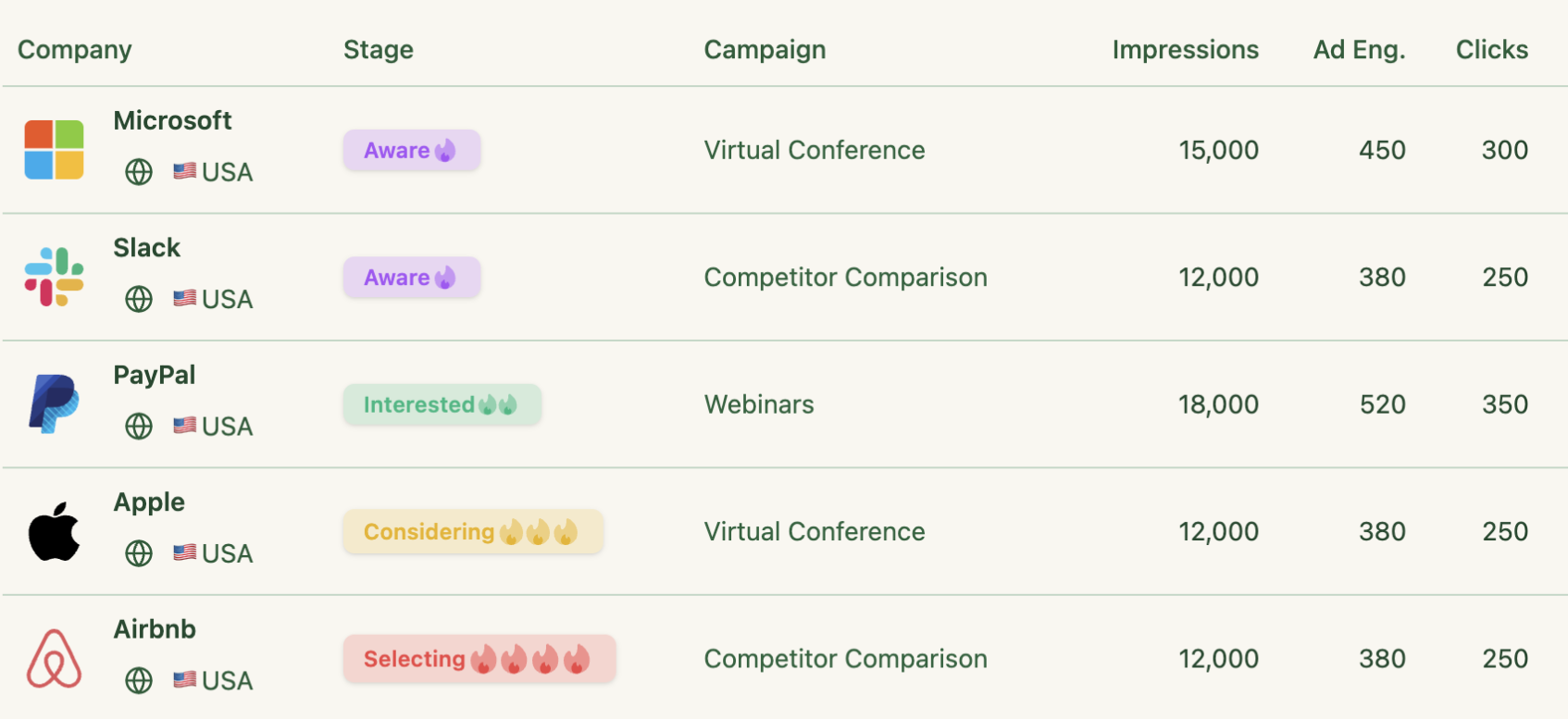
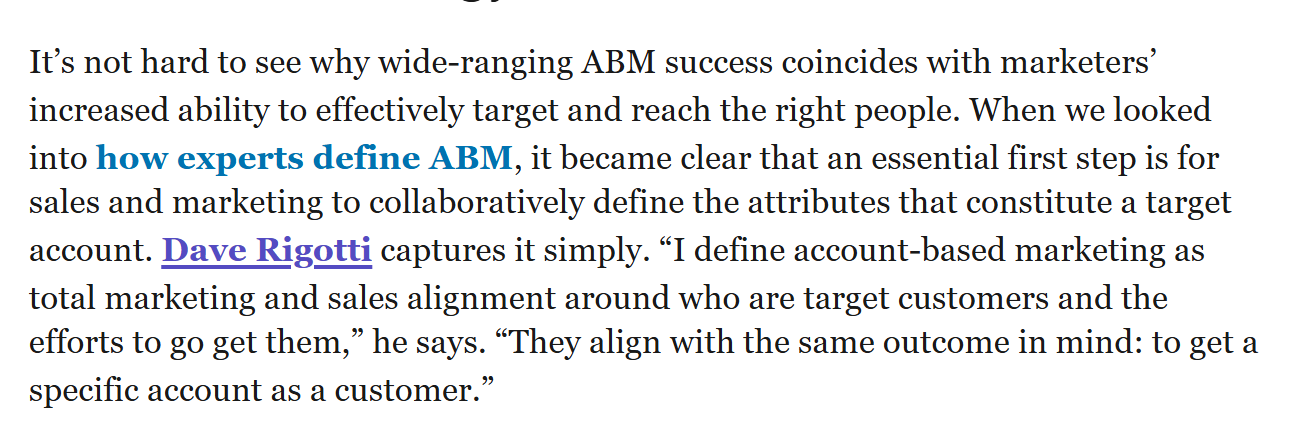
Breaking the comfortable siloed structure that your marketing, sales and customer success teams work in to compound productivity is, in fact, the primary objective of ABM.
And this alignment streamlines the engagement penetration efforts you undertake for your most valued accounts.

Eve Chen, for instance, shared in a LinkedIn article how aligning sales, marketing and customer success into a unified GTM motion worked wonders for a company:
Steps to achieve such alignment in your workspace:
This is where ABM differs the most from lead-gen because here marketing ain’t trying to throw leads at sales and call it a day. Neither is sales repeating “Marketing sends bad/not-warmed-up-enough leads.”
Here, both teams select a list of accounts based on the business’s ideal customer profile (ICP) and get to work together.
So, please go for joint account planning where the wisdom from the sales team is utilized and the TAL is fully agreed upon.
Remember: Your list is your strategy!

Clarify how each team contributes to engaging and penetrating accounts.
For example, marketing can focus on deep account research and value-driven content to warm up each account, while sales develops relationships with multiple decision-makers through personalized outreach.
Customer success should have a plan to turn new wins into advocates and expansion opportunities from day one.
RevOps should integrate the tools (CRM, marketing automation, ABM platforms) and ensure a single view of account engagement, so no insight is lost between marketing’s efforts and sales follow-up.
They also help define common metrics like engagement score, pipeline velocity, etc., and hold teams accountable to them.
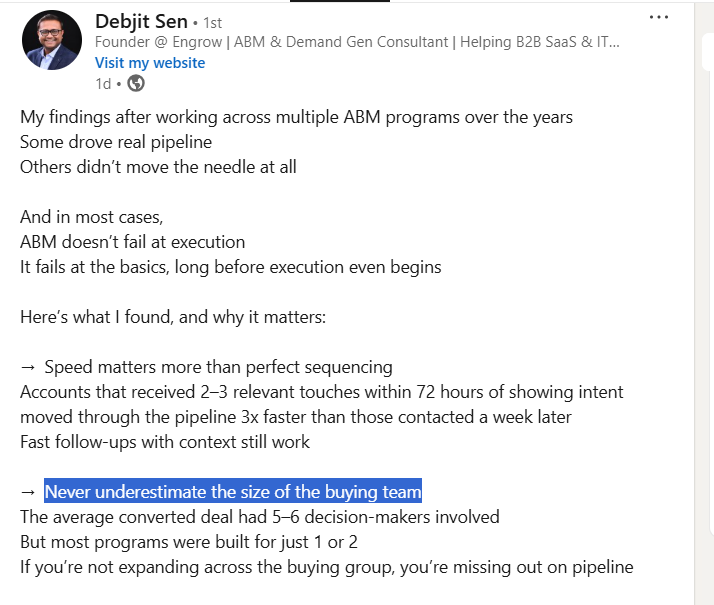
High-value B2B accounts have entire buying committees (average size is 11 as per Gartner), not single decision-makers.
Thus, a core pillar of ABM engagement penetration strategy is multi-threaded engagement: actively building relationships with multiple stakeholders in each target account.
Why?
Single-threaded deals (only one point of contact) have shockingly low success rates.
In fact, one study found single-threaded B2B opportunities had just a 5% chance of closing, whereas multi-threaded ones had a 30% win probability.
To execute multi-threaded engagement:
Research and identify all relevant stakeholders in the account.
This often includes economic decision-makers (e.g. C-suite executives like CIO, CFO), technical evaluators or influencers (department heads, IT architects, end-users), and potential champions.
For each account, map out:
Winning ABM teams use deep customer insights to engage each stakeholder based on their unique priorities and pain points.
For instance, Snowflake’s ABM team doesn’t blast generic messages; they create content specific to each role.
CIOs receive strategic thought leadership about data strategy, while data engineers get technical deep-dives.
This alignment of content to persona ensures every contact feels understood.
Just like I told you to stop relying on one lead/POC.
You also don’t have to stick to just one channel.
Meet stakeholders wherever they are.
That could mean:
For example, you might combine digital touches (such as an exec reading a custom whitepaper you emailed) with high-touch efforts (inviting that exec to an exclusive roundtable or sending a personalized gift).
Use a mix: email + LinkedIn + events + calls, etc., orchestrated to reinforce each other.
At least, all your high-effort campaigns like events must be part of ABM and not standalone tactics, says Emilia Korczynska, VP of Marketing at Userpilot, in her LinkedIn post:
In practice, making this work requires coordination.
Marketing might nurture multiple contacts with account-specific content, while sales development reps (SDRs/BDRs) call high-priority personas and account executives work their networks for C-level intros.
To keep track, use your CRM to log all engagements per account.
Aim to increase the number of active contacts engaged in each account over time.
As a rule of thumb, one expert suggests tracking how many contacts you’re engaging and their seniority; if you’re only engaged with a single contact in a 10,000-employee enterprise, you have a long way to go in penetration.
Yes, this is what ABM engagement penetration is about – the number of stakeholders engaged per total stakeholder headcount.
In an ABM engagement penetration strategy, you need hyper-personalized, account-specific content that makes each stakeholder think, “Wow, they understand us.”
Here’s how to achieve that level of resonance:
Within each account, segment by two axes: persona and buying stage. Personalize to both.
Example from Userpilot: campaign groups per persona, creative per stage.
This persona-by-stage mapping lifted engagement because each person saw the right message at the right time.
Pro Info: Userpilot built their ABM stages framework based on Kyle Poyar’s ABX research.

And here’s what their persona + stage content strategy looked like:

Go beyond token personalization like dropping in <Company Name> and namesake firmographic account research.
For instance, if a target fintech just announced a focus on customer onboarding, send a mini “Customer Onboarding Benchmark for [Account Name]” with data and fixes. That proves you did the work and brings value.
Plenty of ABM teams build bespoke assets per account one-pagers, audits, or reports. It is a heavy lift, but it opens doors with execs who notice you actually understand their business.
Another tactic to improve content personalization is to gauge an account’s qualitative intent – what about your product/service intrigues the prospect.
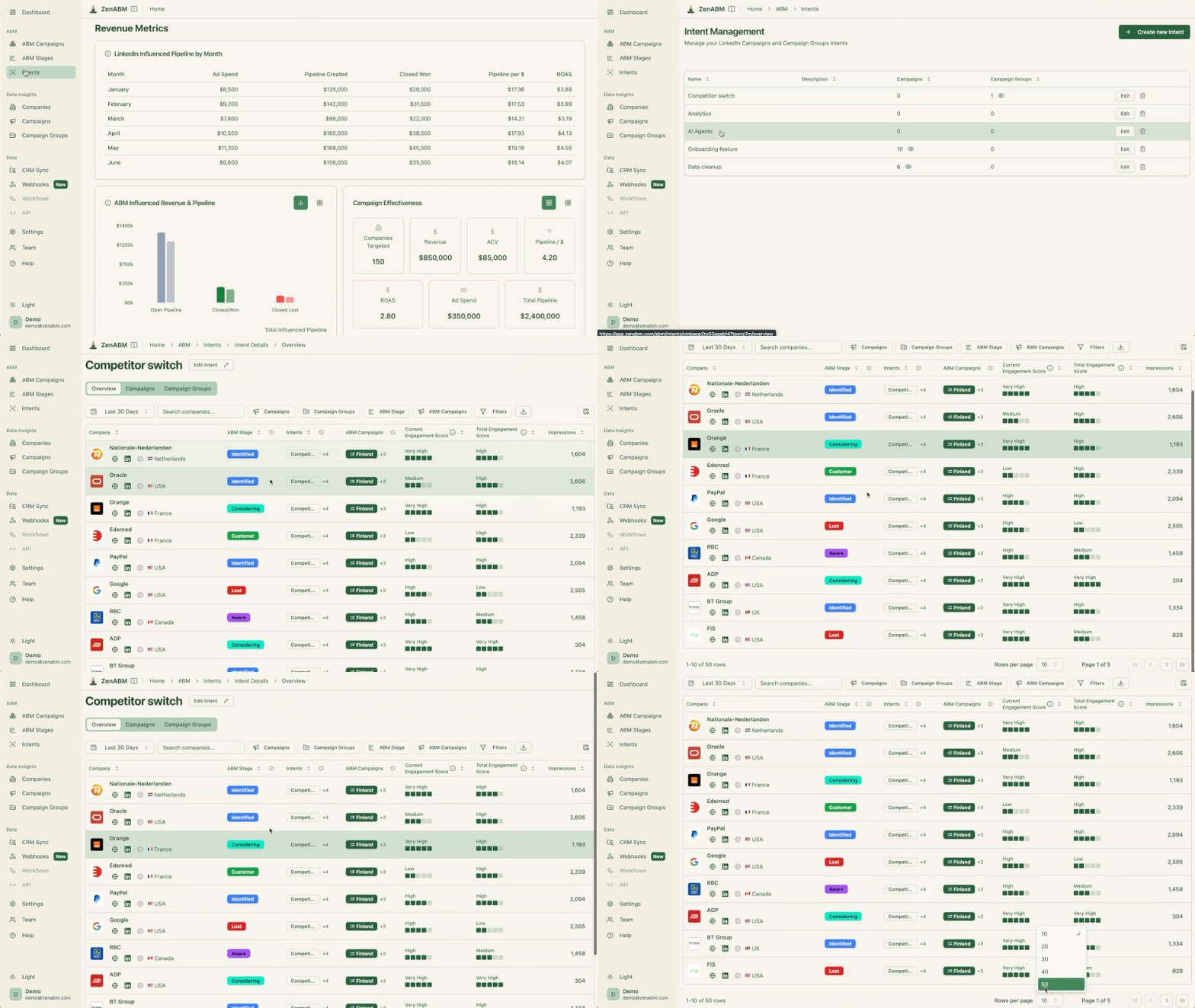
And instead of renting intent data from Bombora or 6sense for that, you can make different ad campaigns/campaign groups based on different features/offers and ZenABM, by virtue of its ad-level reporting, will show you the qualitative intent of each account.
That means you’ll know what an account actually cares about.
If one account keeps watching your onboarding ads while another keeps clicking your analytics ones, your content strategy can split accordingly.

Best part?
These are first-party signals!
It also works as a reverse-reveal method for personas inside the same account.
Run different campaigns for CFOs, PMs, and CMOs, then see which specific campaign got attention.
If finance creatives perform best, you know the CFO persona is engaged, not just “the company.”
With that qualitative intent and persona data, you can sharpen everything:
In short, ZenABM lets you stop guessing and start aligning content, ads, and outreach with what accounts and personas are actually paying attention to.
Punchy, direct language often works better than overly formal corporate speak.
Remember, you are trying to start a conversation and build a relationship, not just deliver a brochure.
Use the prospect’s terminology and address specific challenges they face.
For example: “Hi Sarah, I noticed <HealthTech Inc.> is expanding telehealth in rural clinics. We’ve been working with similar orgs on improving clinician onboarding. If that’s on your radar, I have some insights to share.”
This kind of opener is far more likely to engage an account stakeholder than a generic pitch. It shows relevance in the first sentence.
Each touchpoint should deliver value, not pitches.
That could be a personalized email with a tip or a custom demo using the prospect’s data.
The aim is to educate and assist, positioning your team as a trusted advisor.
When stakeholders actually learn something or see a new approach, they engage more and open doors to wider access in the account.
We briefly talked about multi-channel orchestration for ABM engagement penetration strategy.
Some more tips:
To refine your ABM engagement penetration strategy, you need to measure what matters.
Traditional lead-based KPIs (like basic MQL counts) won’t tell the full story in ABM.
Instead, focus on account-centric metrics and signals that reflect both engagement depth and penetration breadth.
Here are key metrics and how to use them:
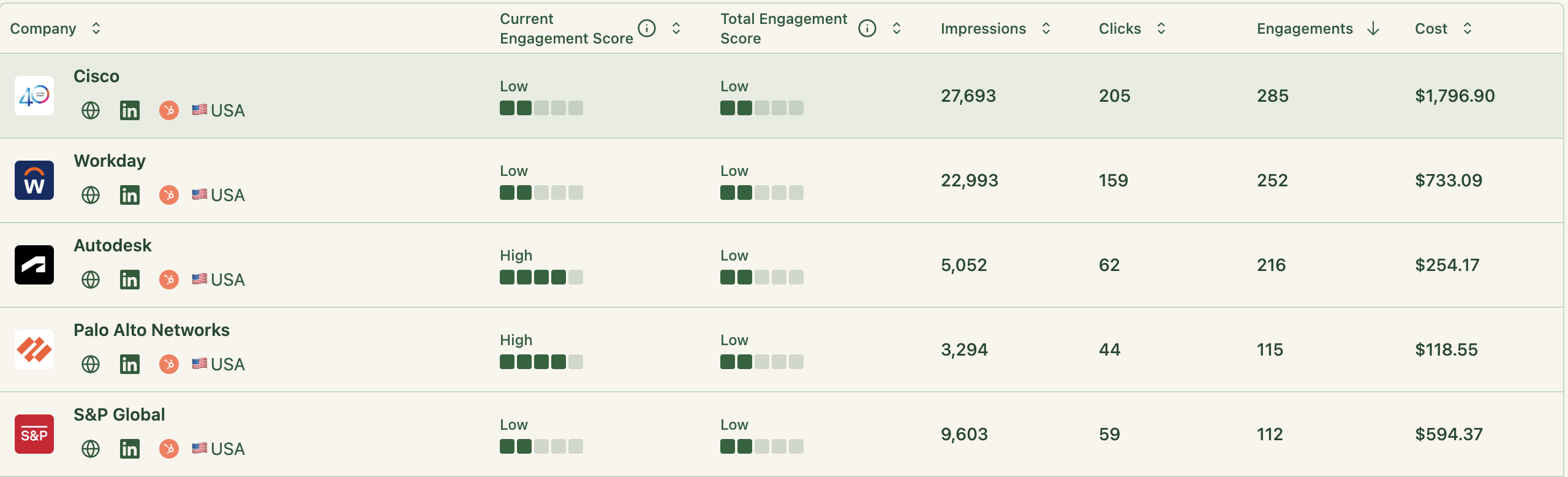
This metric captures how engaged a target account is with your company across all touchpoints.
It’s typically a composite score factoring in activities like website visits, content downloads, email clicks, event attendance, and so on.
For example, you might allocate points for each type of engagement and sum them per account.
ZenABM, for instance, provides this score in the context of paid LinkedIn campaigns:
Measuring account engagement penetration rate is the whole point of this article – so, don’t forget the obvious.
By the way, this metric is of two types:
Note: Don’t confuse a handful of low-level contacts with true account penetration.
Engagement must drive deal progression, right?
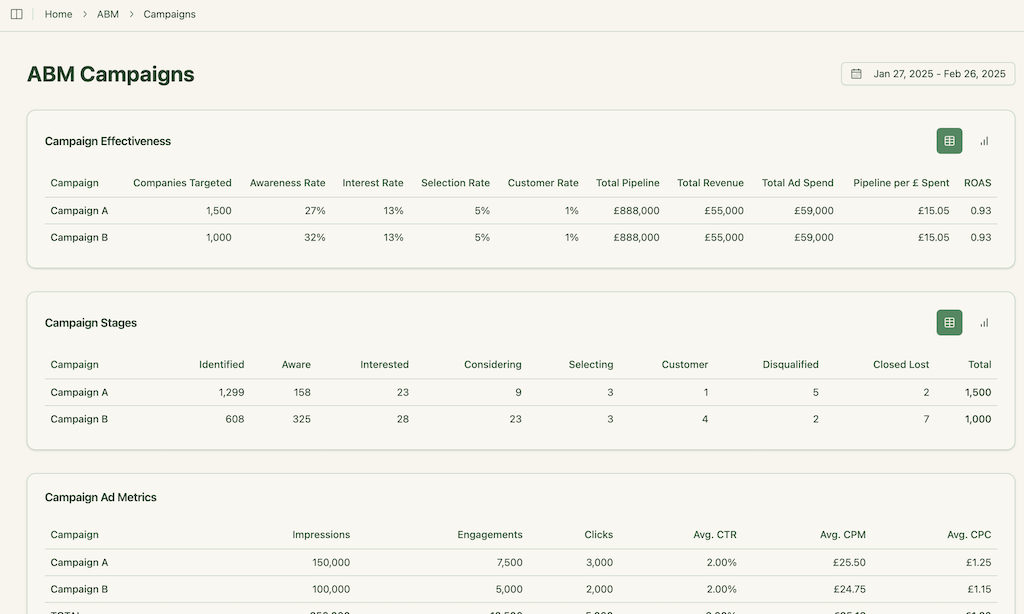
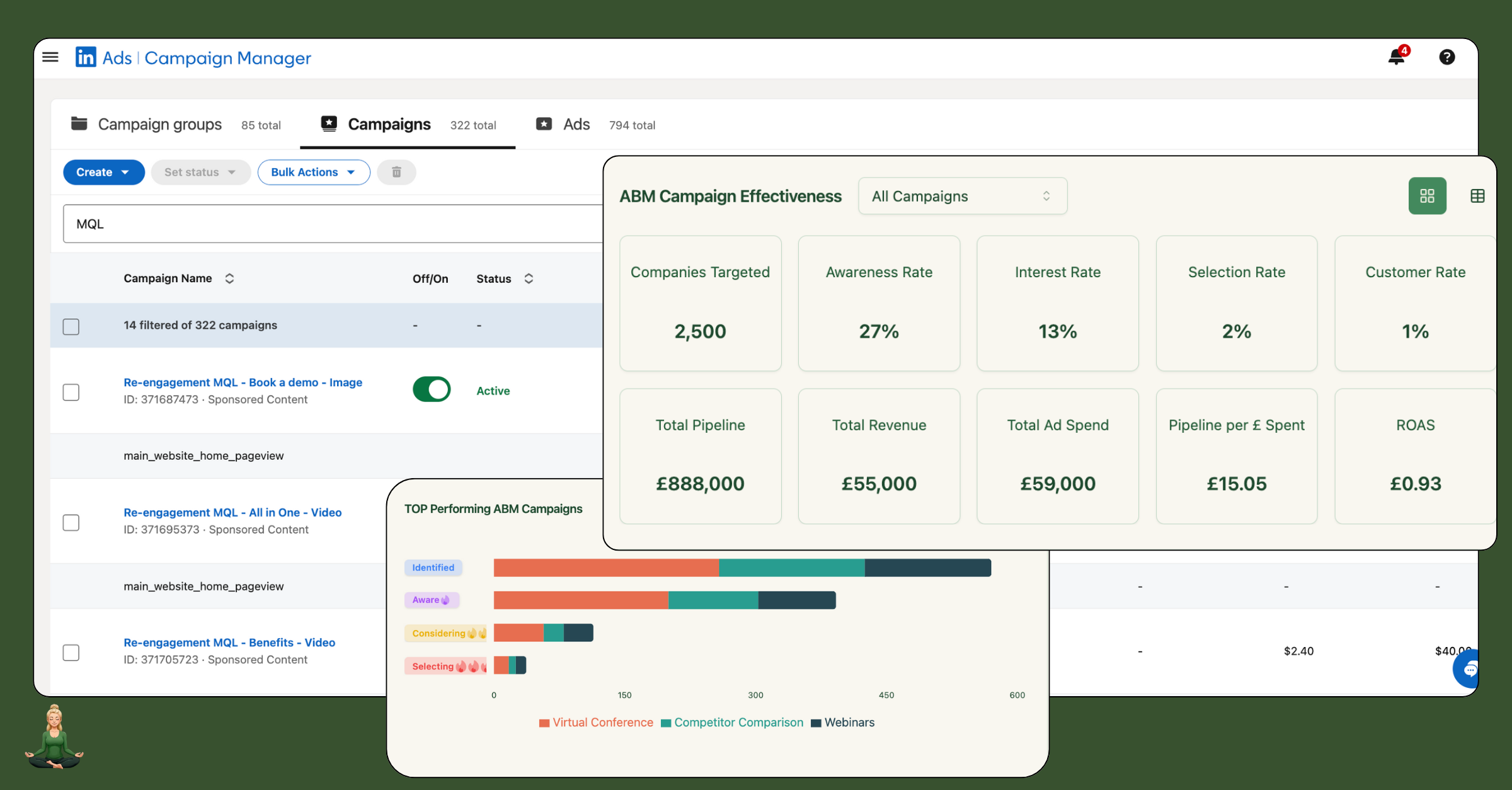
Measure how fast ABM accounts move through the funnel versus non-ABM.
If ABM works, they’ll progress faster from interest to opportunity to close.
One study found ad-engaged accounts advanced 234% quicker than those without targeted ads.
See if something similar is true for you. Rejoice if yes, tweak if not.
Also track stage-to-stage conversion: % of engaged accounts booking meetings, moving to proposals, etc., against your baseline.
Rising ratios show higher-quality engagement and better targeting.
ZenABM, by the way, displays these metrics automatically to reduce your effort:
Track engagement by persona and seniority, especially at the C-level, if your goal is to reach higher up the org chart.
Low numbers signal a need for more executive-focused content or events.
Core ABM principles apply everywhere, but industry, account size, sales cycle, and culture all shape execution.
A SaaS playbook won’t resonate the same way in fintech or healthtech, and a Fortune 500 logo deserves a different cadence than an SMB.
Use the table below to guide adjustments.
| Factor | What to Adjust | Example Focus Areas |
|---|---|---|
| Industry | Customize messaging, proof points, and jargon | Fintech → security & compliance; Healthtech → patient outcomes & privacy; Manufacturing → reliability & efficiency |
| Sales Cycle | Adapt cadence and depth | Enterprise tech or healthcare = long nurture (12+ months); SMB SaaS = tighter, faster cadence |
| Account Size/Tier | Scale personalization effort | Tier 1 = white-glove, custom assets & exec involvement; Tier 3 = programmatic + light personalization |
| Geography & Culture | Localize style and channels | Japan/Middle East = in-person trust-building; US/EU = virtual can suffice; adjust humor and tone |
| Segment Drivers | Highlight the value levers that matter most | SaaS = scalability; Telecom = reliability; E-commerce = speed/ROI; Healthcare = compliance & safety |
Winning a deal is just the start. In SaaS and tech, the real growth comes from upsells, cross-sells, and renewals and a strong ABM engagement penetration strategy can help you with that.
Plays for Expansion:
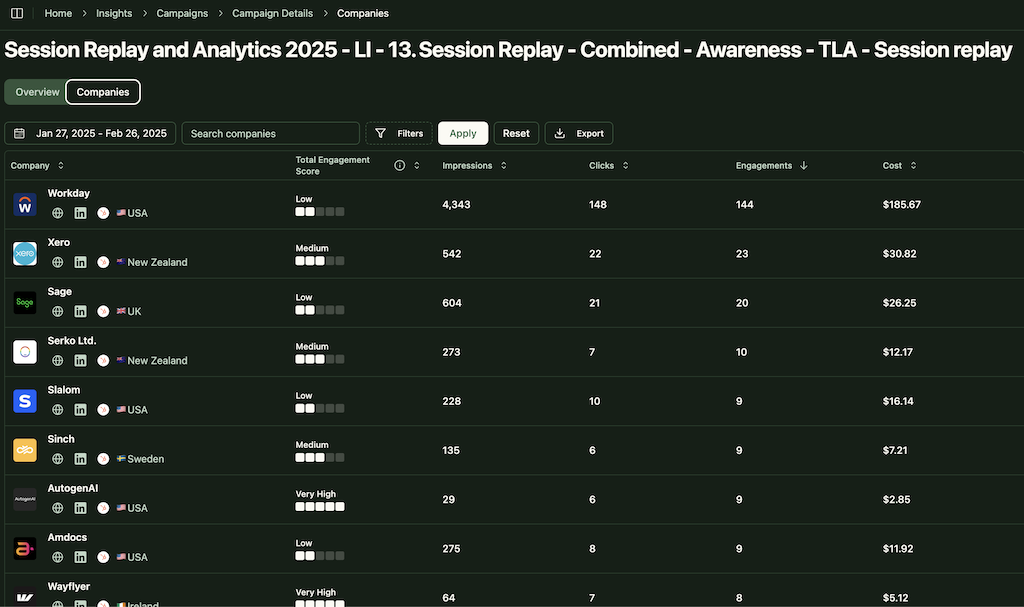
ZenABM pulls company-level LinkedIn ad engagement (impressions, clicks, reactions) and spend for every campaign and campaign group. This lets you see which companies saw which ads, so you can penetrate buying committees with persona-relevant messages and prove lift by account.
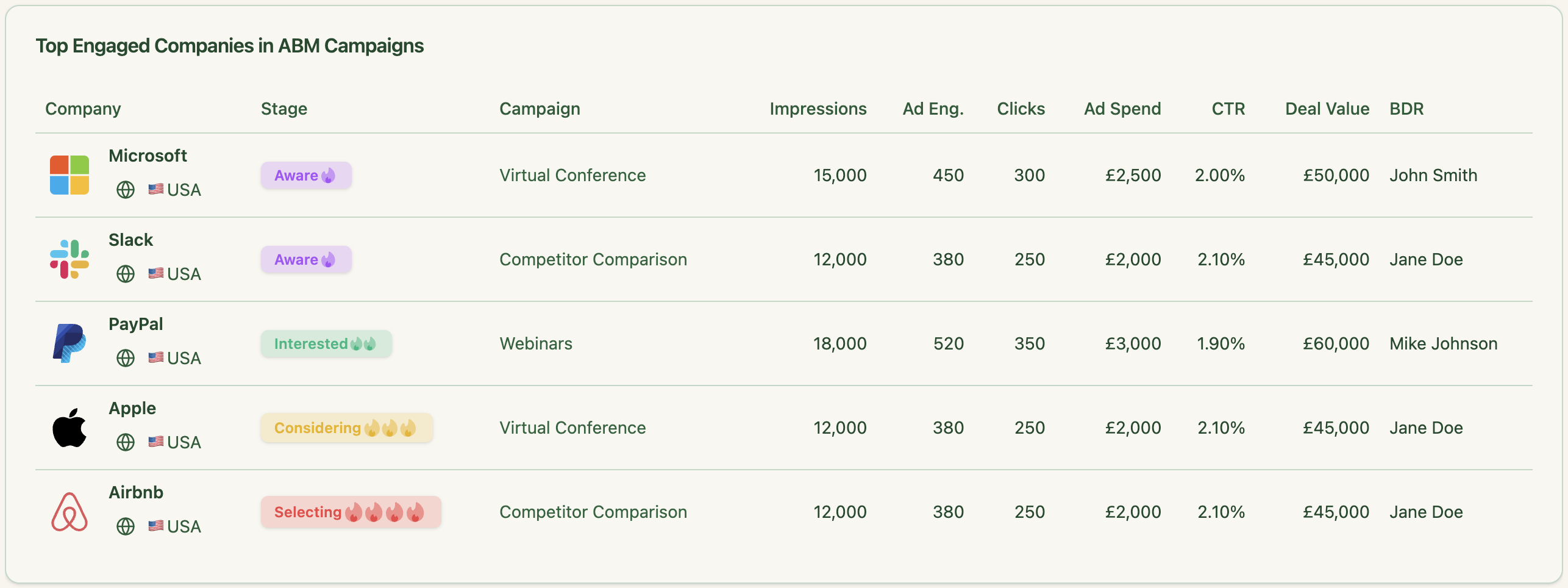
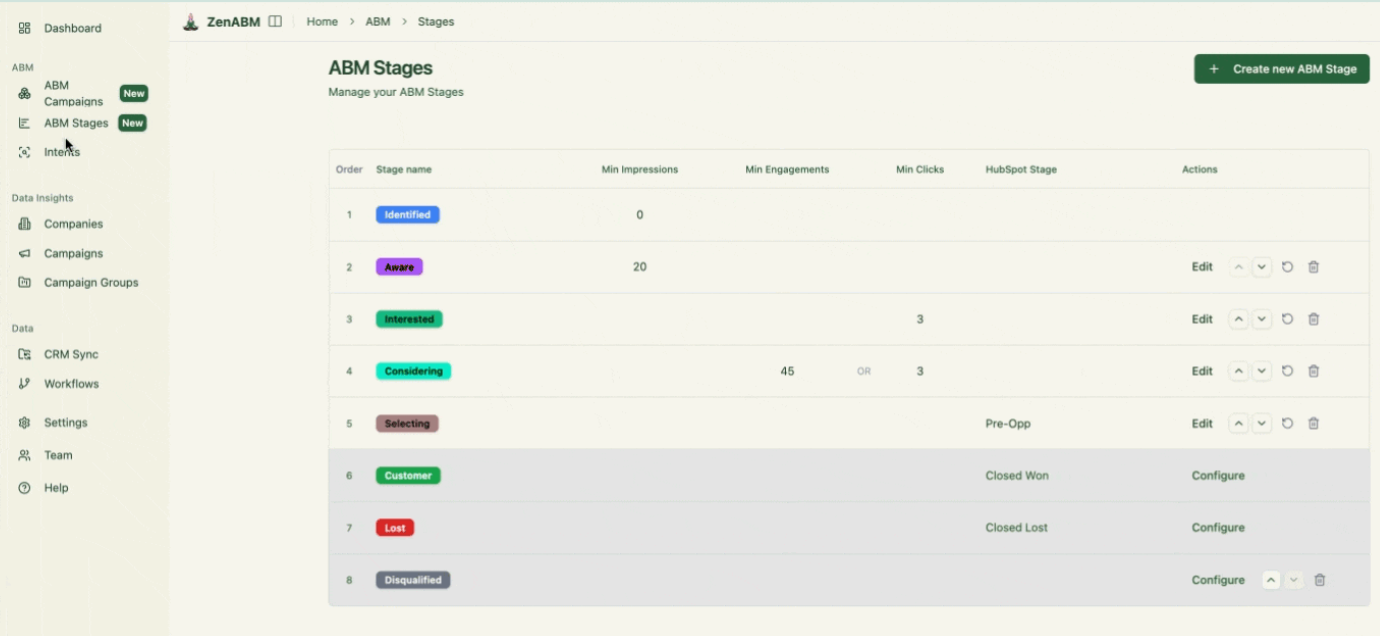
Beyond raw company-campaign engagement, ZenABM rolls up current + historic activity into an Account Engagement Score and assigns each account to a customizable ABM stage. This operationalizes penetration: breadth (how many stakeholders you’re reaching) and depth (how warm the account is).
Stage thresholds are user-defined, so your “Aware → Interested → Considering → Selecting” gates match your GTM.
When an account crosses your “Interested” threshold, ZenABM auto-assigns it to BDRs in your CRM so outreach hits while attention is highest. No daily manual checks, no missed spikes.
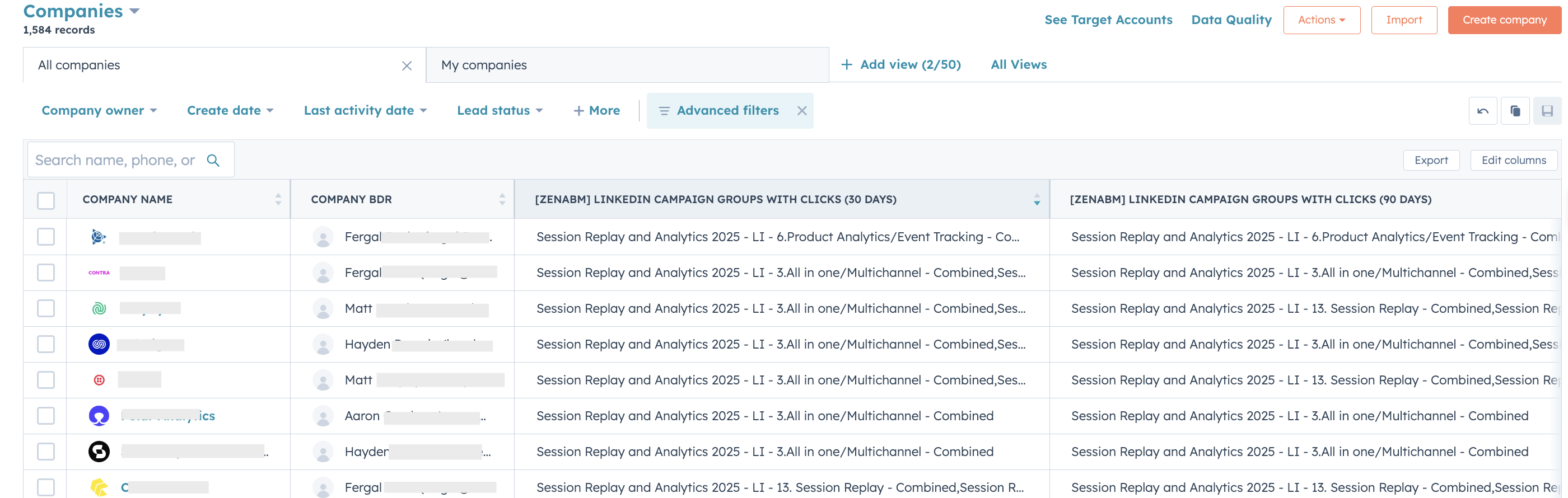
This accelerates multi-threading: reps can immediately work additional personas inside the same account.
Marketing may live in ZenABM, but Sales lives in the CRM. ZenABM bridges both:
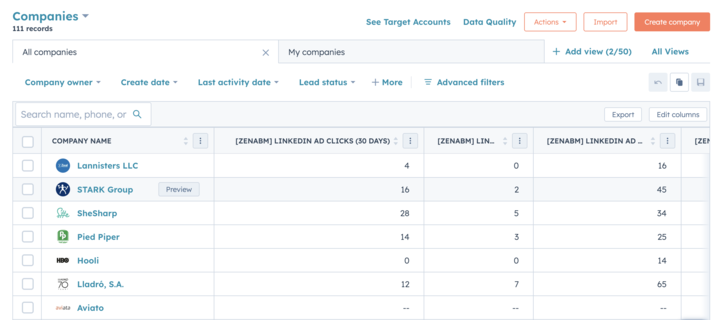
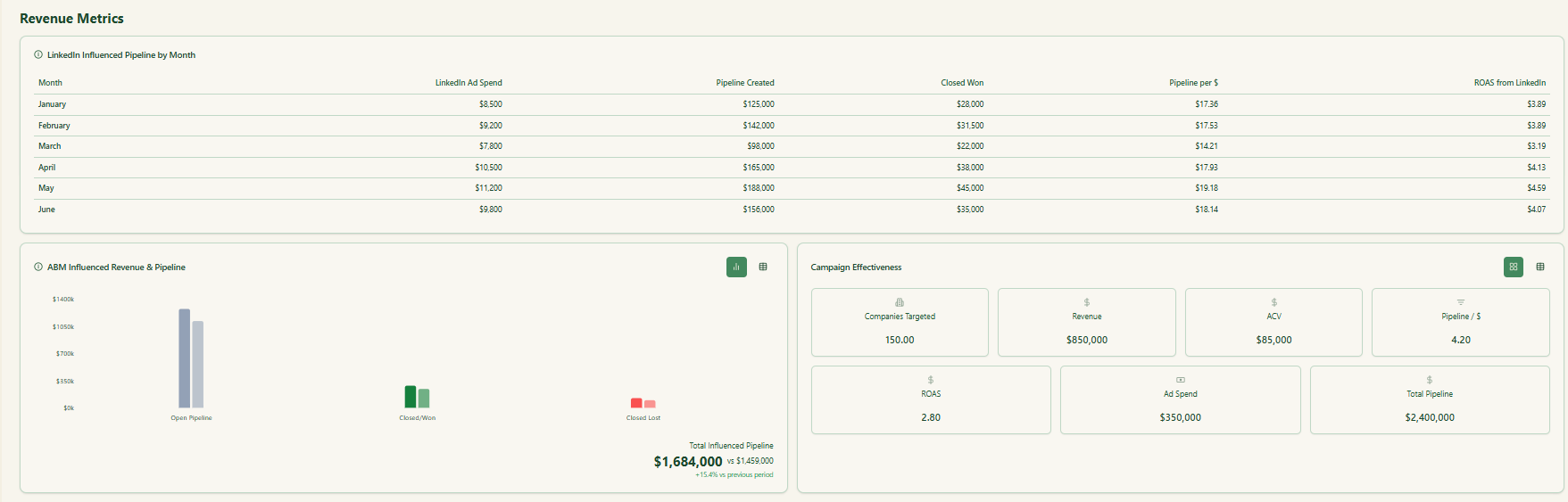
Out-of-the-box dashboards connect exposure → engagement → stage progression → pipeline/revenue. See ROAS, pipeline per dollar, and which campaigns and themes actually advanced buying groups.
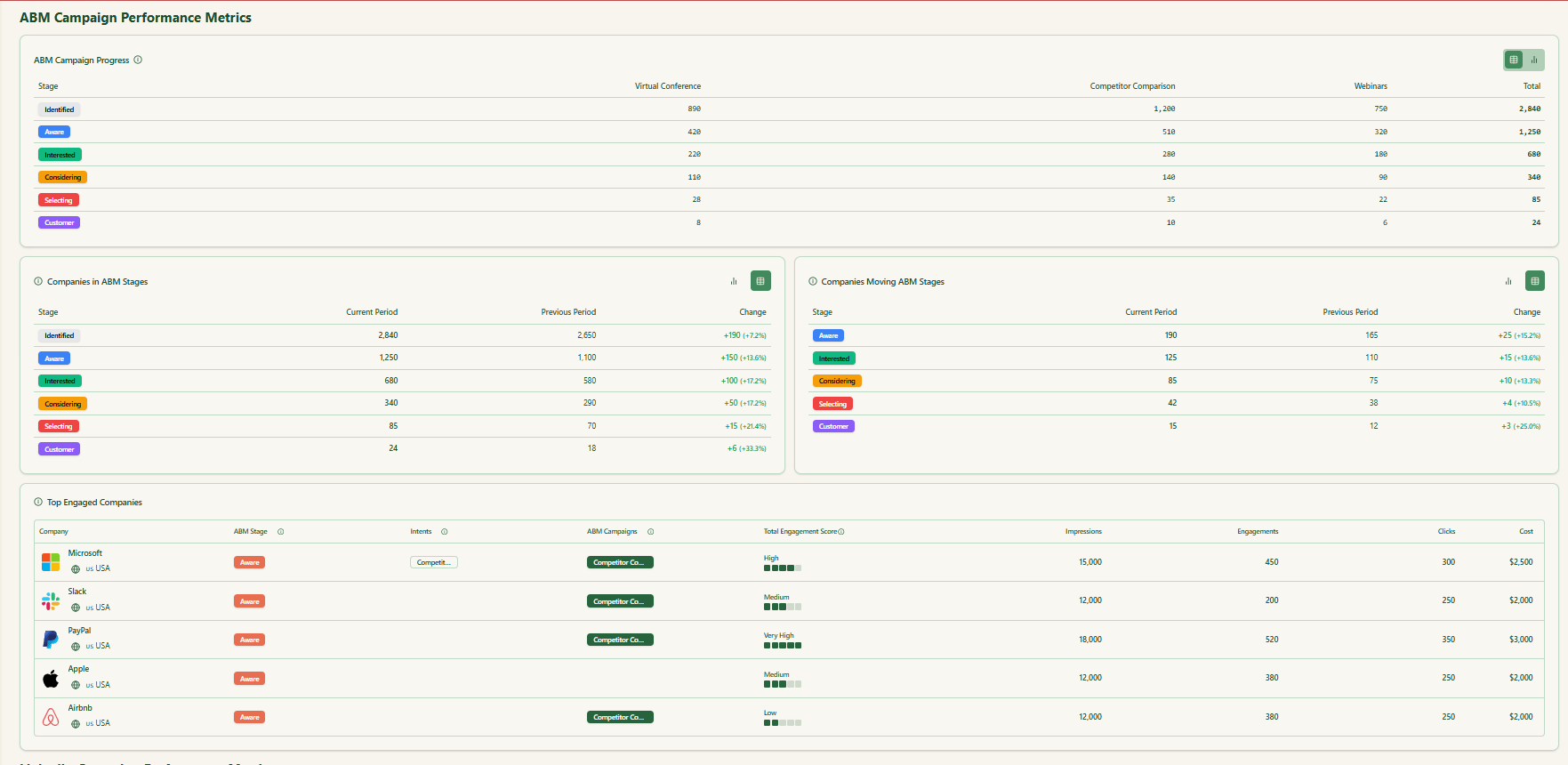
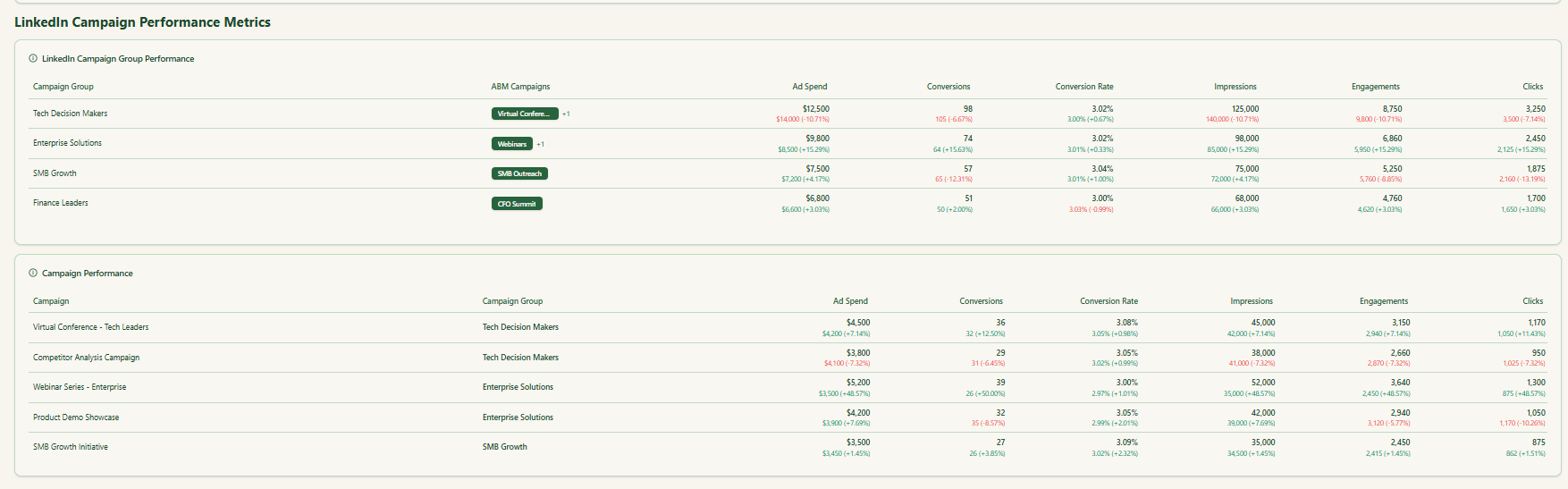
Skip third-party intent. Encode qualitative intent in your own ads (e.g., “Analytics,” “Onboarding,” “Session Replay,” “All-in-one”). Tag campaigns in ZenABM, and it will show which themes each company engages with—plus cluster companies by shared intent.
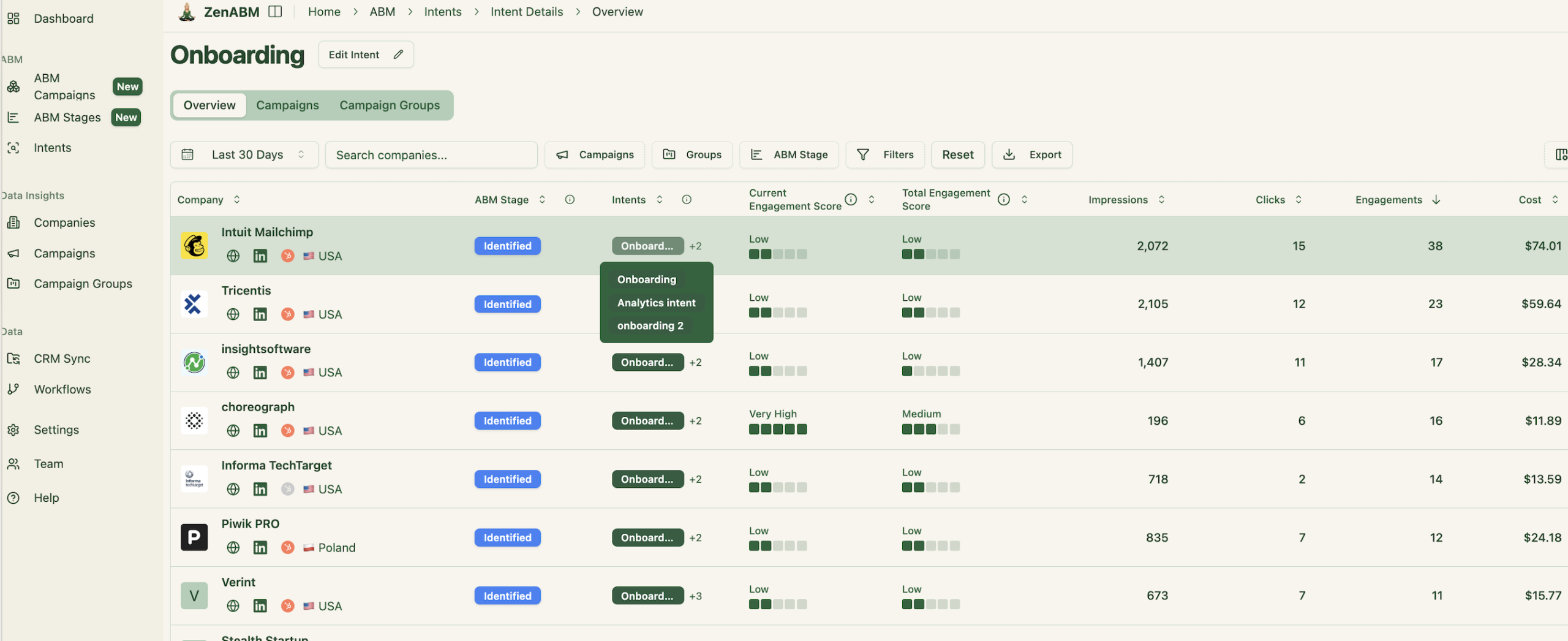
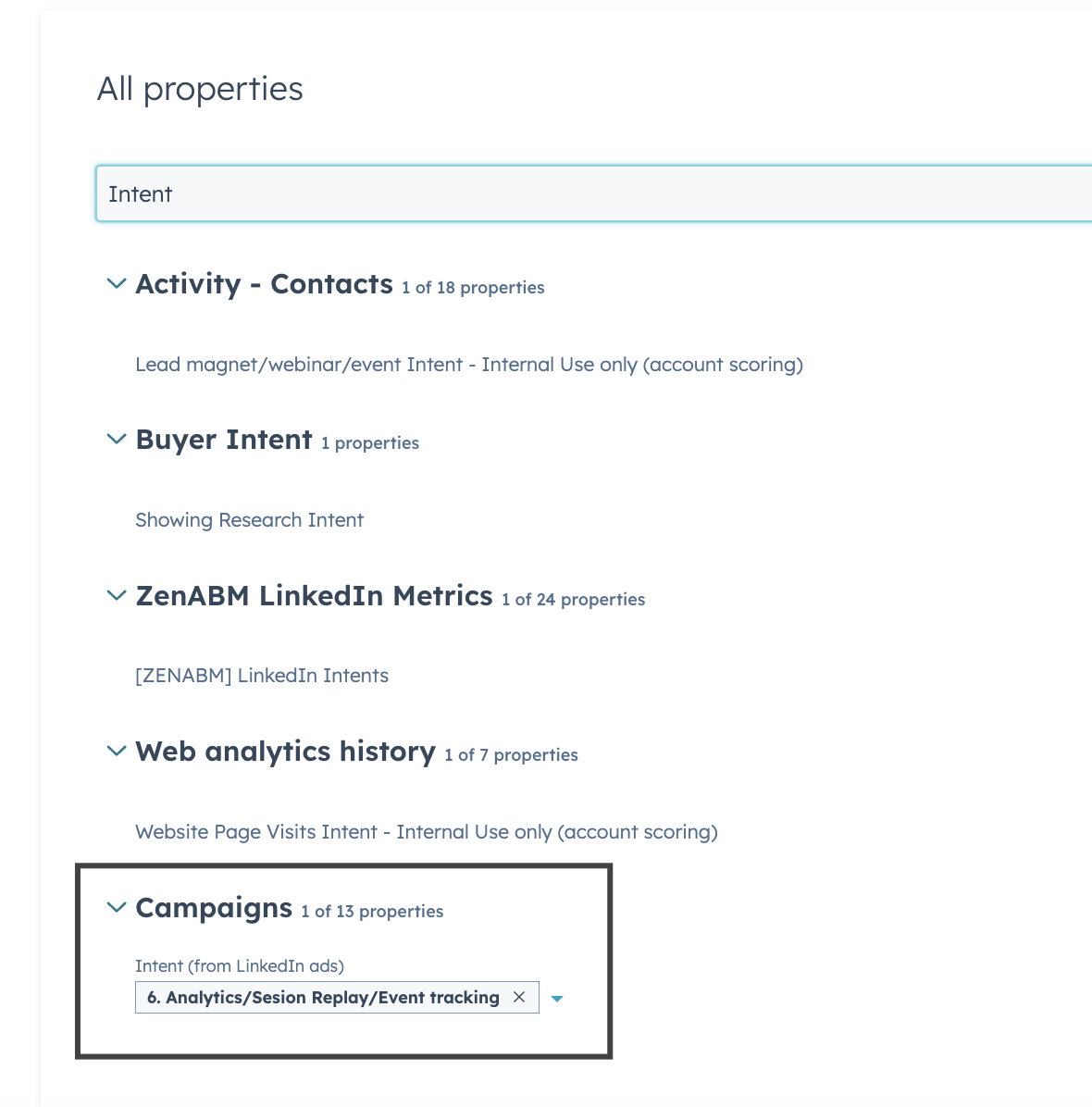
Reverse-reveal personas: Run persona-specific campaigns (CFO vs PM vs CMO). ZenABM shows which exact campaign drew attention inside the account, implying which persona is warming up, so you can personalize ads, content, syndication, and BDR outreach accordingly.
ZenABM visualizes how many companies sit in each ABM stage and how they progress week-over-week. Spot friction (e.g., many accounts stall at “Interested”) and fix with stage-specific content, offers, or executive touches.
Net effect: First-party engagement + intent, push/pull with CRM, auto-routing, and clear stage analytics—everything needed to drive engagement and, crucially, penetration across the buying committee.
Winning ABM programs don’t chase clicks; they win consensus inside accounts.
Align your revenue teams, multi-thread every opportunity, and tailor messages at the intersection of persona and buying stage.
Use first-party intent (e.g., ZenABM’s ad-level engagement by company) to stop guessing and let real interest steer content, outreach, and timing.
Orchestrate value across channels continuously, and judge success by penetration depth, velocity, and revenue, not vanity metrics. Land the deal, and then keep going: expand, renew, and turn customers into advocates. That’s how ABM compounds.
So, want to try ZenABM for better ABM engagement penetration?